
Partnerships in Wartime : Direct Aid teamed up with UA embassy in Hungary
As a delegation from Hungary, we came to Zaporizhzhia to see the city’s reality up close, listen to local leaders, and understand what kind of support matters most right now. Not in theory. Not from a distance. In the schools, medical facilities, shelters, homes for displaced people, and daily life of a city living through war.
On arrival our host, Mr Mykhailo Semikin, acting Govenor of the Zaporizhzhia Regional State Administration noted, not even some officials from Kyiv braves to come here. He was pleased to welcome us in the city.

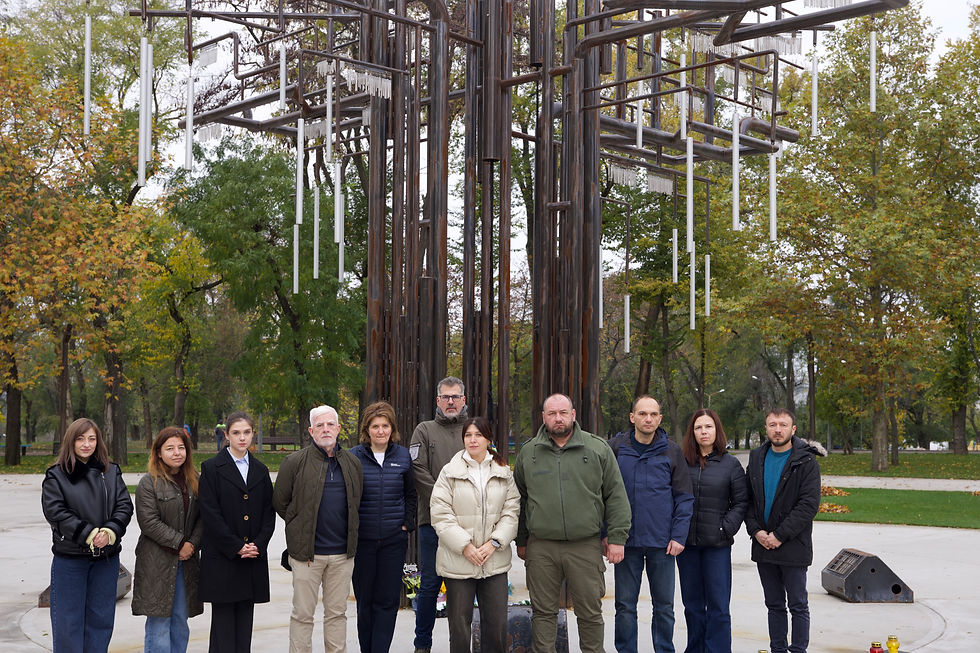
From right to left: Mykhailo Semikin, Olena Zhuk, Alex Davern, Zsuzsanna Bozo, Prof Sandor Fegyir, Leonid Lobanok
We’re here to bring aid to the military defending the city and to civilians carrying the weight of the war, from underground schools to housing for displaced families.
As a Hungarian representative Zsuzsanna noted: Hungarian people are generally good and generous. They respect the fight Ukraine is fighting for freedom. Many ordinary people are sending help. Charities are standing beside us on this journey, including the Malta Red Cross, the Hungarian Red Cross, and the Reformed Church of Hungary. A Hungarian City of Debrecen is helping. We are here to fly the flag for Hungary, and show our respect to the people of Ukraine.
Prof Sándor Fegyír, Ambassador of Ukraine to Hungary
An honour, to have with Mr Sándor Fegyir, Ambassador of Ukraine to Hungary on our side, We all have a huge respect for him. Not only because he is a true hero of the war, fighting himself against the intrudor, but also what he does, for bringing the two nations closer. With the recent changes in Hungarian politics, this is more possible now, that it was even a few years ago. He was here to to build bridges, from Hungary to Ukraine.

Why this visit to Zaporizhzhia matters
There’s a big difference between hearing that a city is under pressure and standing in that city with the people who keep it running. Zaporizhzhia is a frontline regional center. That means the city carries more than its own local needs. It supports residents, displaced people, public workers, students, medical teams, and defenders. It has to keep basic life moving while rockets, blackouts, displacement, and uncertainty shape the day. It has become a "norm" for the city to live like this, but hard to accept this, coming from countries of peace.

As we were walking into the municipality's hedquarter, you can hear that buzzing noise above the sky, and alarms went on on the streets.

Prof. Sandor Fegyir had looked at this phone, and showed us the type of distruction heading towards the city. The Ukrainian Armed Forces know, they located the glinder bombs and deadly drones. It's a question yet, if they land, or they will be taken down by the Ukrainian air defense, but they are in action. That's not something we will see right now, we have a meeting to attend, to talk about future. We continued into the basement meeting rooms, under the currently empty city council's building.

The official meeting brings local and international voices together
The visit included an official meeting with key leaders from Zaporizhzhia and representatives of Hungary and Direct Aid for Ukraine. The delegation was set to meet with:
Ivan Fedorov, Head of the Zaporizhzhia Regional State Administration and Regional Military Administration
Mykhailo Semikin, Acting Govenor of Zaporizhzhia Regional State Administration
Olena Zhuk, Chairwoman of the Zaporizhzhia Regional Council
Viktoriia Ahientaieva, Director of the Municipal Institution “City Development Institute of Zaporizhzhia
Representing the Ukrainian Embassy in Hungary, Ambassador Prof. Sándor Fegyir
On the Direct Aid for Ukraine side, Alex Davern and Zsuzsanna Bozo took part in the visit.

This group of ours is an interesting mix : The Embassy side connects the work to diplomacy and public support in Hungary. Direct Aid for Ukraine brings hands-on experience delivering international assistance. On Zaporizhzhia side the regional leaders, who know the urgent priorities. The regional council understands public needs and local decision-making. The City Development Institute can speak to the city’s recovery, planning, and long-term links with other European communities. That mix is exactly what wartime cooperation needs. It moves between the local, the humanitarian, and the international .
What Zaporizhzhia needs right now
The attack in which multiple glide bombs struck a school building in Komyshuvakha, Zaporizhzhia region
The converstain started with the latest attrocities that the city - and the country of Ukraine - has suffred. Namely the attack by Russian armed forces that killed dozens of civilians gathered to receive humanitarian aid in Zaporizhzhia region on Monday shows the devastation powerful aerial glide bombs cause when used in populated areas.
The attack in which multiple glide bombs struck a school building in Komyshuvakha, Zaporizhzhia region took place in the morning as civilians had gathered to receive humanitarian aid. Local authorities had announced the distribution of humanitarian aid the day before on a social media channel with nearly 5,000 subscribers, stating that the distribution would take place at the school between 10 AM and noon on 2 November. "Dozens were killed while civilians gathered to receive humanitarian aid in Komyshuvakha - the timing and location of the humanitarian distribution was well publicized. Either the Russian armed forces knew that there was a humanitarian distribution taking place, or they failed to take the most basic steps to find out what was happening in this village they were planning to attack. In either case, this attack seems to have violated the most fundamental principles of international humanitarian law.
We all agreed, this is beyond evil, and a devastating war crime that the region has to deal with.
Support for defenders
The city’s safety depends on those defending it, and they need consistent support. Some people separate humanitarian aid and defense support into two totally different boxes. On the ground, the line is not always that neat. Zaporizhzhia is being defended every day. The people doing that work are helping protect schools, hospitals, homes, roads, and shelters. If they cannot move, communicate, evacuate the wounded, or respond quickly, civilians are at greater risk. That is why this mission includes support for the troops defending Zaporizhzhia.

Direct Aid for Ukraine is clear about this part. We’re here to bring aid to the military defending Zaporizhzhia and the region. This type of aid is something we have been delivering the last 5 years, since the war started.
Help for civilians
Civilian aid is just as urgent. War puts pressure on families, older people, children, medical workers, teachers, and those who have already been displaced from other areas. Civilian support can mean aid for shelters, heating support, supplies for collective housing, help for schools, or basic items for people who have had to leave their homes. It can also mean support for local institutions that are still serving the public in extremely difficult conditions. Viktoriia Ahientaieva, Director of the Municipal Institution “City Development Institute of Zaporizhzhia stated, she is happy to receive cooperation projects with NGO's and other voluntary organisations from Hungary.

Underground schools and safe learning
One of the most powerful signs of resilience in Ukraine is the effort to keep children learning. In frontline areas, that often means adapting schools for safety and taking them underground. They give teachers a way to keep teaching. They give parents a little more stability. They give the city a sense that normal life, even a changed version of it, hasn’t been fully taken away. Zaporizhzhia’s educational facilities need attention not only because students need lessons, but because schools are part of the emotional backbone of a city. When education continues, hope has somewhere to live.

Why partner city links can help during war
One of the important topics of the visit is the possibility of a future Zaporizhzhia visit to Hungary and establishing partner city agreements with the city of Szolnok. Ambassador Sandor Fegyír had a clear offer, to host such meeting in Hungary.
A partner city relationship can help communities stay connected. It can support cultural exchange, school links, municipal learning, humanitarian drives, and public awareness. It can give people in Hungary a clearer way to understand Zaporizhzhia, not only as a name in the news, but as a real city with families, schools, hospitals, and local leaders.

We were all grateful for the city and the region to accept our meeting, and openly talk about what is their priority now, and where relations with Hungary can start. And Mr Fegyír is a great ambassador of building on this possibility. Zaporizhzhia is open. Partner city agreements don’t solve everything. They don’t replace military defense, national policy, or large-scale humanitarian support. But they can create steady bridges between communities. And in a long war, steady bridges matter.
While leaders met, drivers kept the aid moving
While part of the team was at the city council meeting, our other team of drivers of pickup trucks and vans went to the Nova Post office. They had to collect pallets we had sent from Uzhhorod two days earlier. We had mailed them because we had more humanitarian aid than space in the vehicles. That’s a very real part of this work. There’s the emotional side, and then there’s the puzzle of fitting boxes, bags, tools, equipment, and people into limited space.

Here the solution was simple: send what you can ahead, then pick it up when you arrive. And magically, NovaPost in Ukraine can just do that. We are grateful to the team of Balázs Trauttman (Hungarian Dragon Feeder Foundation , and the team of the Uzzhorod Dragons : Oleksandr Liakhin, Vitaliy Melnik, Pasha Datso and Valentin Shtefanyo.
If one pallet is delayed, someone has to solve it. If one van is full, someone has to rearrange the plan. If a situation changes for safety reasons, distribution has to wait. Humanitarian aid here is Zaporizhzhia is full of these small decisions. They’re not usually seen, but they matter.
What comes next after the visit
The real value of these visit comes from what follows.There are several possible next steps:
Stronger cooperation between Direct Aid for Ukraine and local institutions, especially on PTSD care
Hungarian support focused on schools, medical needs, displaced people, and defenders
A possible Zaporizhzhia delegation visit to Hungary
Further talks about partner city agreements with the city of Szolnok
More public awareness in Hungary about Zaporizhzhia’s situation
The most useful outcome would be a relationship that keeps working . We are all proud to be here, and start a converstion that can lead to actual help, from Hungarian cities like Szolnok, which seems to be ready for talks.
If you want to support this work directly, you can donate to Direct Aid for Ukraine’s winter support campaign. Every act of help matters more when it’s tied to real needs on the ground.
FAQ
Why is the Hungarian delegation visiting Zaporizhzhia?
The visit is meant to help the delegation understand the current situation in frontline Zaporizhzhia. The focus is on urgent needs, social infrastructure, schools, medical facilities, and support for civilians and defenders.
Who will the delegation meet in Zaporizhzhia?
The delegation met regional and city leaders, including Mykhailo Semikin, Olena Zhuk, and Viktoriia Ahientaieva. Direct Aid for Ukraine representatives Alex Davern and Zsuzsanna Bozo will also take part, along with Ambassador Prof. Sándor Fegyir from the Ukrainian Embassy in Hungary.
Why are underground schools part of the conversation?
Underground schools help children continue learning in safer spaces during wartime. They also support families and teachers by keeping education alive under extremely difficult conditions.
What is the point of a partner city agreement with Szolnok?
A partner city agreement can build a lasting connection between communities. It can support visits, public awareness, humanitarian efforts, and practical cooperation between Zaporizhzhia and Hungarian cities such as Szolnok. There is a strong possibility of Ukrainian children spending some holiday in Hungary, getting away and just having a good time.
How does Direct Aid for Ukraine help?
Direct Aid for Ukraine helps by bringing practical support to defenders and civilians. That can include aid connected to frontline needs, underground schools, displaced people’s housing, and other urgent requests from local partners. We have already asked to bring help to the kid's hospital and provide some beds for the underground kindergarten. We are not talking unrealistic experctations, just smaller projects we can realise.
A city that keeps standing deserves partners who keep showing up
Zaporizhzhia’s courage isn’t abstract. It shows up in classrooms moved underground, hospitals that keep working, families rebuilding routines, officials planning under pressure, and defenders holding the line.

This visit was a chance to respond in a way that lasts. Hungary’s connection with Zaporizhzhia, through diplomacy, aid, and possible partner city ties, can become part of the city’s wider support system.
The job now is to listen well, help where help is needed, and keep showing up.
How can you help?
If you want to support this work directly, you can donate to Direct Aid for Ukraine’s winter support campaign. Every act of help matters more when it’s tied to real needs on the ground. We were asked to help and buy 40 beds for School 19 underground nursery and cover the cost of essential medical items for the local Chilren's hospital.


Comments